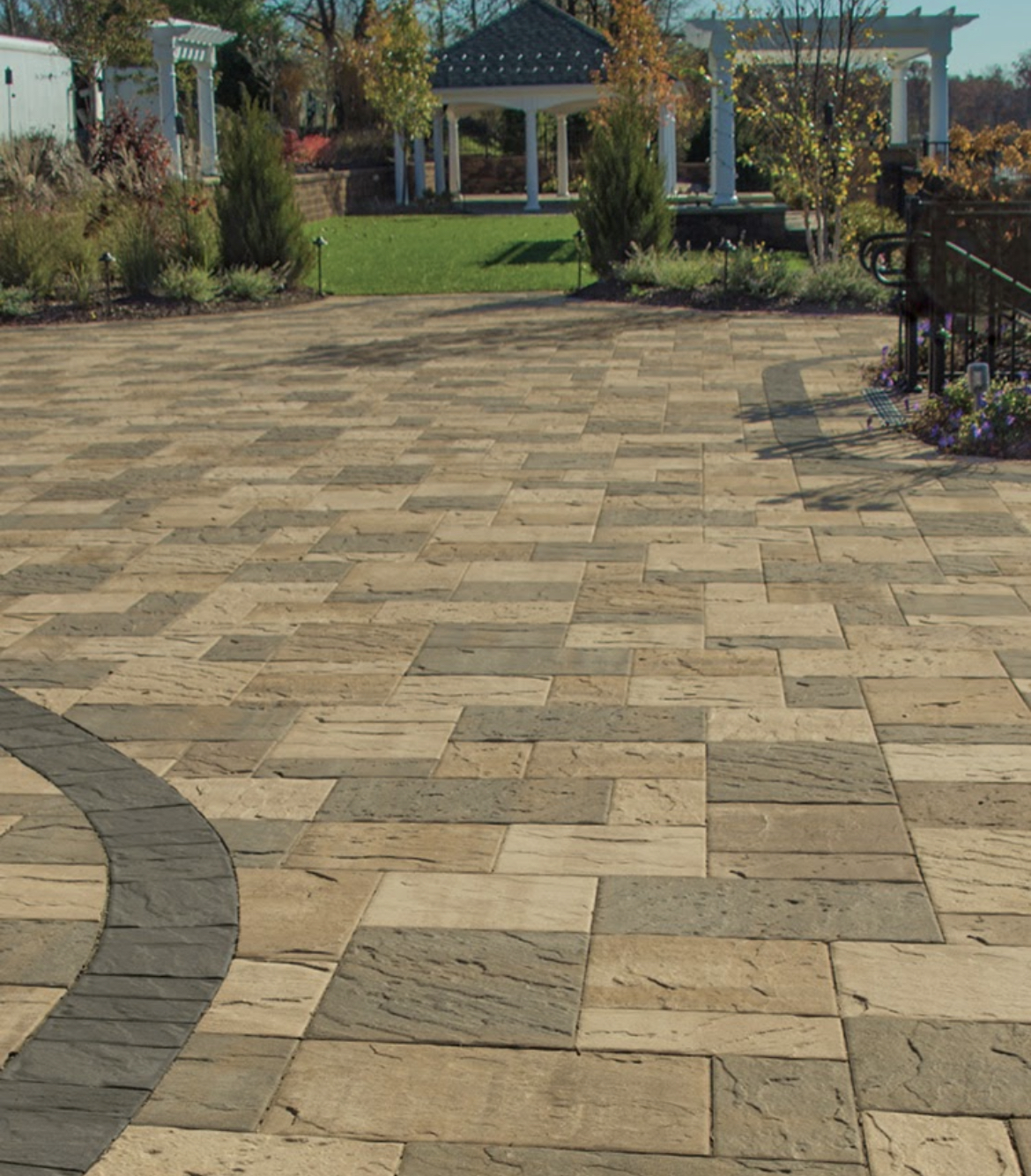
A well-built paver patio is the single best way to turn an underused backyard into the room your family actually lives in all summer. In Westchester and Fairfield County, where outdoor living season runs from May cookouts through crisp October fire-pit nights, the right patio pays you back in daily enjoyment and in resale value. But the difference between a patio that still looks perfect in 20 years and one that heaves, cracks, and sinks after two winters comes down almost entirely to design and base preparation — not the pavers themselves.
This guide walks through the best paver patio ideas for 2026, the materials and patterns worth your money, real cost ranges for the NY and CT market, and what proper installation actually involves — whether you're in Scarsdale, Greenwich, Rye, or anywhere along the Sound.
Why a Paver Patio Beats Poured Concrete
Homeowners often start by pricing a slab of poured concrete because it looks cheaper up front. In the Northeast, that math almost always flips. Our freeze-thaw cycle — where trapped moisture freezes, expands roughly 9 percent, and pries materials apart — is brutal on any monolithic surface. A concrete slab has nowhere to move, so it cracks, and a cracked slab is nearly impossible to fix invisibly.
A paver patio is an interlocking system of individual units set on a flexible, compacted base. It flexes with the ground instead of fighting it, resists cracking, and if a single unit is ever stained or damaged you lift it and swap in a new one. Add richer color options, dozens of pattern choices, and a slip-resistant surface, and pavers win on looks, longevity, and lifetime cost.
7 Paver Patio Ideas Trending in 2026
The strongest backyard patio ideas this year lean into larger formats, warmer tones, and spaces designed to do more than one job. Here is what we're building most across Westchester and Fairfield:
- Large-format pavers. Oversized units 24 inches and up read clean and contemporary, with fewer joints to weed or maintain. They're the defining look of 2026.
- Warm, natural color palettes. Homeowners are moving away from cool grays toward clay, tan, and weathered-stone tones that pair with the wooded settings common in Bedford, Armonk, and back-country Greenwich.
- Defined outdoor zones. One patio, several rooms — a dining area, a lounge around a fire feature, and a path to the grill, separated by a change in paver color or a Belgian block border.
- Herringbone and running-bond patterns. Herringbone locks units together for maximum strength; running bond gives a timeless, elongating look on smaller yards.
- Built-in fire pits and seat walls. A masonry seat wall doubles your seating and frames the space, extending usable season well into fall.
- Permeable paver patios. Joints that let stormwater drain straight through help with drainage and can ease impervious-coverage limits in many CT and NY towns.
- Blended materials. A porcelain or bluestone field with a contrasting brick or cobble border adds custom character without a full custom price.
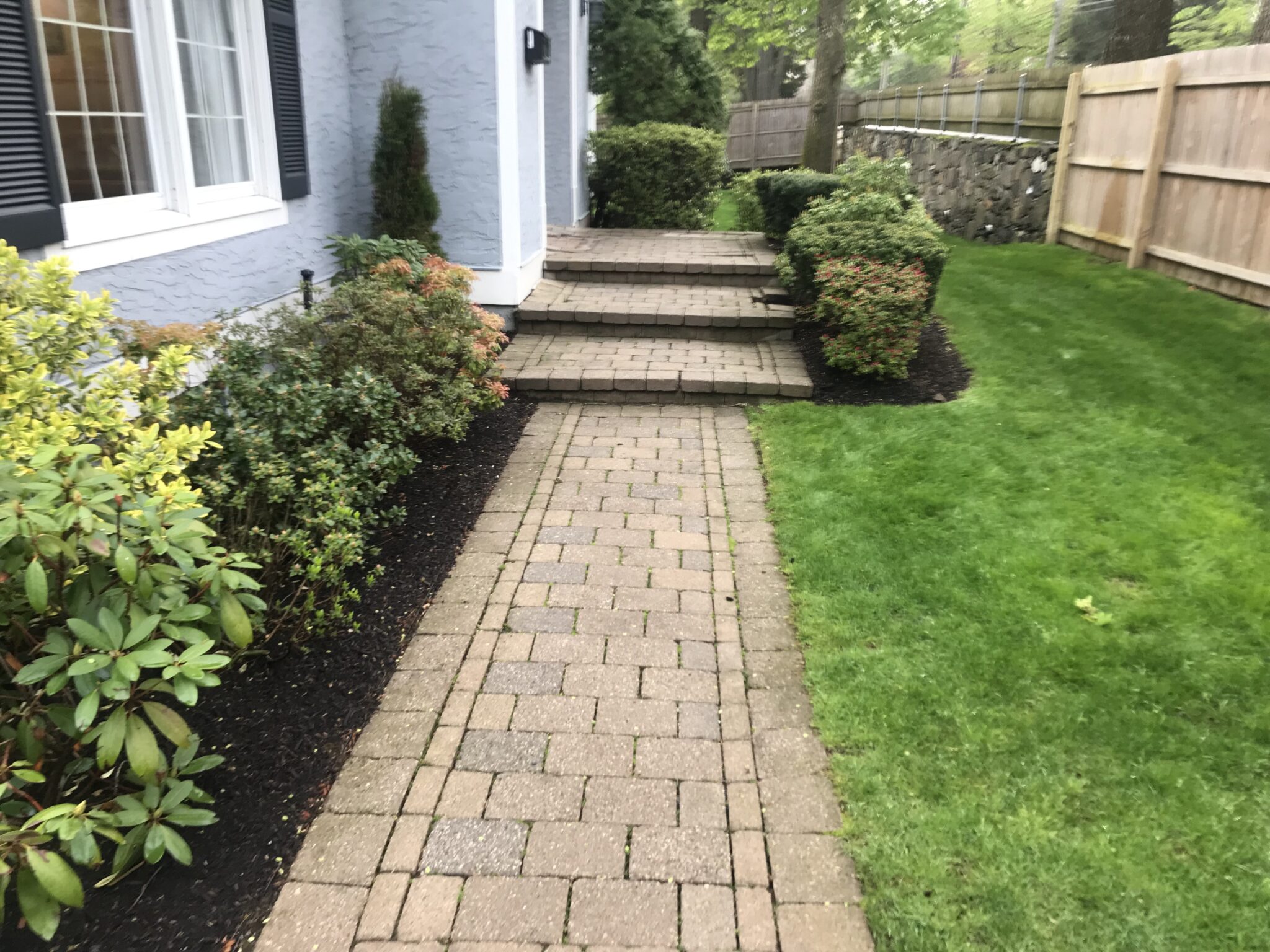
A crisp paver border and connecting walkway tie the patio into the rest of the landscape — and protect the field edge from shifting.
Choosing the Right Paver Material
Material is where budget and style meet. Each option performs differently in our climate, and the right choice depends on how you'll use the space:
- Concrete pavers ($2–$8 per sq. ft. in material): the most popular, budget-friendly choice, in a huge range of shapes and colors. A workhorse for family patios.
- Clay brick pavers ($4–$15 per sq. ft.): classic New England character that never dates, and color that runs all the way through so chips don't show.
- Natural stone — bluestone and granite ($8–$30 per sq. ft.): the premium, timeless look favored in Greenwich, Rye, and Scarsdale, with unmatched durability.
- Porcelain pavers ($10–$22 per sq. ft.): dense, stain-resistant, and slip-rated — ideal for high-traffic areas and poolside patios.
Whatever you choose, the material is only as good as what's underneath it. We've seen beautiful $25-a-foot bluestone fail in three years because it was set on a lazy base — and humble concrete pavers look perfect after 20 because the base was done right.
The Base Is 80 Percent of the Job
A patio that lasts starts 8 to 12 inches below the surface: excavation to solid sub-grade, a geotextile fabric layer, compacted crushed stone laid and tamped in lifts, then a screeded bedding layer. Skimp here and no paver on earth will save you from settling and heaving. This invisible work — not the pretty top course — is what separates a craftsman install from a weekend job.
How Much Does a Paver Patio Cost in NY & CT?
For a professionally installed paver patio in Westchester or Fairfield County, expect roughly $18 to $45 per square foot installed, all-in, depending on material, pattern complexity, site access, and add-ons like seat walls, steps, or a fire feature. Installation labor alone typically runs $7 to $15 per square foot, and intricate layouts like herringbone or circular patterns add 15 to 25 percent in labor because of the extra cutting and alignment.
As a rough planning number, a 400-square-foot concrete-paver patio often lands in the $9,000 to $16,000 range, while the same footprint in natural stone with a seat wall can run $20,000 or more. Grading, drainage, and how far we have to haul material to your backyard all move the figure — which is why an honest on-site estimate beats any online calculator.
Integrating the Patio With Your Whole Property
The best patios don't sit in isolation. We think about how the space connects to the rest of your hardscape: a paver walkway linking the patio to the driveway, a Belgian block border tying it to an existing driveway, or matching materials that carry the design language from the front approach around to the back. When the elements relate to one another, a backyard reads as designed rather than assembled.
For homeowners across Westchester County, NY and Fairfield County, CT — from Stamford to White Plains — that whole-property thinking is what turns a patio into a genuine outdoor room.
Frequently Asked Questions
How long does a paver patio last in the Northeast?
A properly installed paver patio — meaning correct excavation, a compacted crushed-stone base, and polymeric sand in the joints — will easily last 25 to 40 years, and often longer. Individual pavers can be lifted and reset if the ground shifts, so the surface is essentially renewable. The base is what determines lifespan far more than the paver you pick.
Can you build a paver patio over an existing concrete slab?
Sometimes. If the existing slab is sound, level, and drains properly, pavers can be set over it with a bonded or sand-set method. But if the slab is cracked, heaved, or pitched the wrong way, overlaying it just inherits those problems. We evaluate the slab first and give you a straight answer rather than burying a failing surface.
What is the best time of year to install a patio in NY or CT?
Late spring through early fall is ideal, when the ground is workable and compaction is reliable. Summer is peak season, so booking a quality crew early matters — the best installers in Westchester and Fairfield fill their calendars quickly once the weather turns.
Do paver patios need much maintenance?
Very little. Sweep as needed, rinse occasionally, refresh the polymeric joint sand every several years, and reseal if you want to deepen the color and add stain resistance. Compared to a concrete slab you can never truly repair, a paver patio is remarkably low-effort to keep looking new.
Ready to design a backyard paver patio built to last? Get a free on-site design consultation from JL Construction Group — call (203) 658-6744 today.