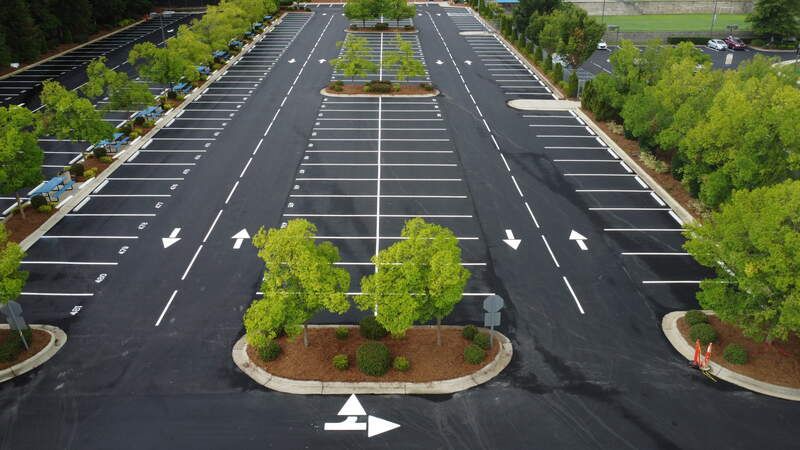
When your driveway starts looking tired, the hardest part isn't deciding to fix it — it's deciding how. The sealcoating vs resurfacing question trips up most homeowners because the three options on the table — sealcoating, resurfacing, and repaving — look similar from the curb but solve completely different problems. Choose the cheap fix when you needed the structural one, and you'll be paying twice within a year. Over-spend on a full tear-out when a surface treatment would have done the job, and you've wasted thousands.
In the freeze-thaw climate of Westchester County, NY and Fairfield County, CT, picking the right repair matters even more than it does in milder regions. This guide breaks down what each option actually does, what it costs, and the clear signs that tell you which one your asphalt needs — so you can walk into your next asphalt paving estimate already knowing the answer.
The Three Options at a Glance
Before comparing them, it helps to understand that asphalt fails from the top down and from the bottom up. Surface aging — fading, fine cracks, oxidation — is cosmetic and slow. Structural failure — a crumbling base, sinkholes, alligator cracking — starts underneath and is far more serious. Each repair targets a different layer:
- Sealcoating protects the surface of structurally sound asphalt. It is maintenance, not repair.
- Resurfacing (also called an overlay) installs a new layer of asphalt on top of a sound base. It renews the driving surface.
- Repaving removes and rebuilds the pavement when the base itself has failed. It is a full reconstruction.
What Sealcoating Actually Does
Sealcoating is a thin liquid coating brushed or sprayed over existing asphalt to shield it from UV rays, water, oil, and the freeze-thaw cycles that punish Northeast pavement every winter. It does not add structural strength and it cannot fix cracks or potholes — it simply slows the aging of asphalt that is still in good shape. Think of it as sunscreen for your driveway. A quality sealcoat typically adds two to four years of life per application and costs a fraction of any other option. For a deeper look, see our guide to the real benefits of sealcoating.
Sealcoating is the right call when your asphalt is structurally solid but showing early surface wear: a faded grey color, a slightly rough texture, or hairline cracks under a quarter-inch wide. New driveways should cure six to twelve months before their first seal, then be re-sealed every two to three years.

A professional asphalt overlay renews the surface without the cost of a full tear-out — when the base is still sound.
What Resurfacing Does — and When It Wins
Resurfacing goes a major step further than sealcoating. The crew cleans and repairs the existing surface, then lays a new layer of hot asphalt — usually around an inch and a half to two inches thick — directly over it. The old pavement stays in place and acts as the base for the new top. The result looks and performs like a brand-new driveway, and a proper overlay can extend the life of your asphalt by ten to fifteen years.
Resurfacing is the smart middle option when the surface is worn but the base is still solid. If your driveway has widespread cracking, faded color, and a generally rough surface, but no major drainage failures, sinking, or heaving, an overlay gives you a like-new result at a fraction of full reconstruction cost. It is also a popular choice for commercial parking lots where downtime needs to be minimized.
The 30% Rule of Thumb
A simple field test: if cracks and potholes affect less than about 30% of your driveway and the damage is limited to the top layer, resurfacing is usually enough. Once damage covers more than 30%, or you see "alligator" cracking that signals a failing base, resurfacing only buys a little time — repaving becomes the better long-term value.
When You Truly Need to Repave
Repaving means removing the old asphalt entirely, regrading and recompacting the base, and installing fresh pavement from the ground up. It is the most expensive option, but it is the only real fix when the foundation has failed. Pouring a new surface over a bad base is throwing good money after bad — the same problems will telegraph back through the new asphalt within a season or two.
Tell-tale signs you are past resurfacing: deep alligator cracking across large areas, potholes that keep returning no matter how often they are patched, standing water from a base that no longer drains, and visible sinking or heaving. If that sounds like your driveway, our breakdown of the signs your driveway needs replacement will help you confirm it, and proper driveway drainage solutions are worth designing into any rebuild so the new pavement lasts.
Cost, Lifespan, and ROI Compared
The three options sit at very different price points, and matching the spend to the actual problem is where homeowners save — or waste — the most money:
- Sealcoating — the lowest cost by far, repeated every 2-3 years. Adds 2-4 years of surface life each time. Best ROI for asphalt in good condition.
- Resurfacing — a moderate investment, roughly a third to half the cost of full replacement. Adds 10-15 years when the base is sound.
- Repaving — the highest upfront cost, but the lowest cost per year of life when the base has failed, since it delivers 20-30 years from a properly built driveway.
For current local pricing on full installation, our driveway paving cost guide for Westchester & Fairfield lays out the 2026 ranges and the seven factors that move the number.
Why the Northeast Climate Changes the Math
Freeze-thaw is the single biggest factor in how fast asphalt fails here. Water seeps into small cracks, freezes, expands, and pries the pavement apart a little more with every cold snap. That is exactly why skipping routine sealcoating is so costly in our region — and why a base that has already taken on water rarely responds to a surface-only fix. Whether you are in Westchester County, NY or Fairfield County, CT, the goal is the same: keep water out of the structure for as long as possible, and rebuild properly the moment it gets in. We serve homeowners across the region, from White Plains and Scarsdale to Greenwich and Stamford.
Frequently Asked Questions
Can I sealcoat instead of resurfacing to save money?
Only if your asphalt is structurally sound. Sealcoating protects a healthy surface but does nothing for cracks, potholes, or a failing base. Sealing over real damage hides the problem briefly and almost always costs more in the long run.
How long does resurfacing last in NY and CT?
A professional overlay on a solid base typically lasts 10-15 years here, especially if you keep it sealcoated every few years afterward. Freeze-thaw cycles shorten that window if the surface is neglected.
How do I know if my base has failed?
Watch for alligator cracking over large areas, potholes that return after patching, standing water, and sections that sink or heave. These point to a base problem that only repaving will solve. A quick on-site inspection confirms it for certain.
What is the best time of year for these repairs?
Late spring through early fall is ideal, since sealer and hot asphalt both need warm, dry conditions to cure properly. See our guide on the best time to pave a driveway for scheduling tips.
Not sure which fix your driveway needs? Get a free, honest assessment from JL Construction — call (203) 658-6744 today.